Deck vs. Patio: Cost, Longevity, and Value Guide
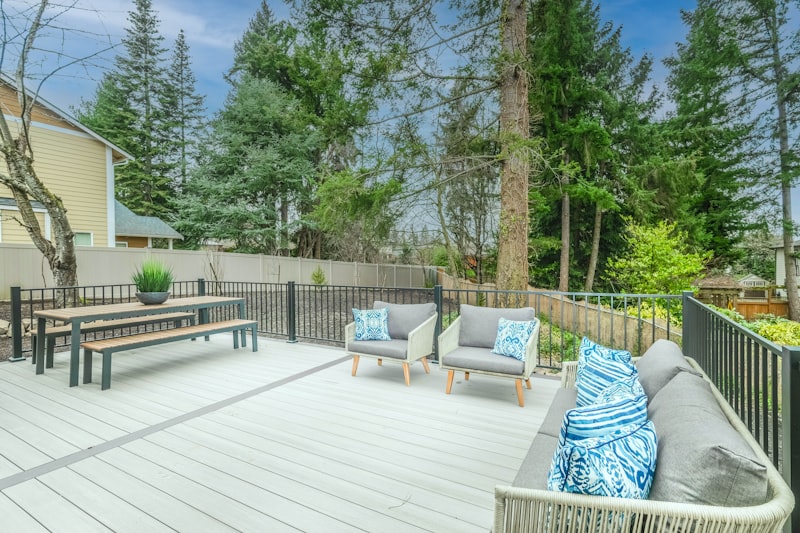
Building a dedicated backyard entertainment space is one of the highest-yield home improvement projects you can tackle. However, when planning your outdoor layout, you must make a fundamental design choice: do you build an elevated wooden or composite deck, or pour a flat concrete or stone paver patio? Our deck vs patio guide details construction steps, maintenance demands, and real-world costs.
The Structural Differences Between Decks and Patios
A deck is an elevated wooden or composite framing platform supported by vertical concrete piers, beams, and joists. Decks are ideal for sloping backyards or homes with elevated main-level doors. A patio is a flat-to-the-ground seating area made of poured concrete, stamped concrete, or interlocking stone pavers laid over a compacted gravel and sand bed. Patios are ideal for flat backyards and require significantly less structural engineering.
| Project Metric | Elevated Wood/Composite Deck | Ground-Level Stone/Paver Patio | Winner |
|---|---|---|---|
| Upfront Material Cost | High (Framing lumber + planks + rails) | Moderate (Pavers, gravel, and sand sand) | Patio |
| Sub-Base Preparation | Concrete support piers sunk below frost | Heavy excavation, gravel tamping, sand grading | Deck (Less soil moving) |
| Expected Lifespan | 15 - 30 Years (Wood fades, composite lasts) | 30 - 50+ Years (Stone pavers are permanent) | Patio |
| Yearly Maintenance | Sanding/staining (Wood) or wash (Composite) | Weeding joints, polymeric sand top-up every 5 years | Patio (Easiest maintenance) |
| Average Cost Installed | $25 - $55 / sq ft | $12 - $30 / sq ft | Patio (Cheaper option) |
Understanding the Cost of a Deck Versus Patio
Analyzing the cost of a deck versus patio shows that patios are almost always the more economical backyard outdoor living remodel. A standard 16x20 ground-level concrete paver patio costs between $4,500 and $8,000 installed, depending on paver styles. An elevated wood deck of the exact same size costs between $8,000 and $12,500, and upgrading to composite decking pushes the deck cost to $16,000 to $22,000 due to material price premiums and railing requirements.
- Building Permits: Decks attached to your home or elevated more than 30 inches off the ground require structural municipal building permits. Flat-to-the-ground patios rarely require permits.
- Sloping Land: If your backyard has a steep slope, grading the earth to build a flat patio requires constructing massive concrete retaining walls, which can easily cost $5,000 to $15,000. In these cases, building an elevated deck on vertical piers is far cheaper.
Resale ROI Isn't the Only Financial Consideration
Beyond the upfront build cost, decks and patios carry different ongoing costs that affect total lifetime spend. A wood deck's staining schedule, roughly every 2 to 3 years, adds up to real money over a couple of decades, while a patio's main ongoing cost is periodic joint sand replenishment or occasional concrete sealing, both cheaper and less frequent. Composite decking splits the difference: higher upfront cost than wood, but close to patio-level maintenance afterward.
Combining Both Isn't Unusual
Plenty of backyards end up with both a deck attached to the house and a patio further out, connected by steps or a short path, rather than choosing one exclusively. This works well when the house sits above grade, making an attached deck the practical connection point, while a separate ground-level patio anchors a fire pit or dining area further from the house. It costs more than choosing just one, but it avoids compromising on either space's strengths.
Frequently Asked Questions
Which option has a higher return on investment (ROI)?
Wood decks typically have a slightly higher resale ROI (around 65% to 75%) than stone patios (around 50% to 60%) because elevated decks add highly visible, functional outdoor square footage that integrates directly with home sliding doors.
How do I prevent weeds from growing in stone paver patios?
Ensure your installer sweeps high-performance 'polymeric sand' into the paver joints during installation. Polymeric sand contains synthetic binders that activate when wet, curing into a hard, rubbery mortar that blocks weeds and resists ants.
Do decks or patios add more usable square footage?
Roughly the same, since both create a defined outdoor living area of comparable size for similar money at the low end. The real usable-space advantage of a deck comes into play on sloped lots, where a patio would need expensive grading or retaining walls to achieve the same flat footprint.
Which is easier to expand later, a deck or a patio?
Decks are generally easier to extend, since adding a new framed section that ties into the existing structure is a contained carpentry project. Extending a patio means matching existing pavers or concrete finish, which can be difficult if the original material is no longer manufactured or has weathered to a different color.
Does a covered deck or patio cost significantly more?
Adding a roof structure, pergola, or full covered porch adds meaningfully to either project's cost, often $5,000 to $15,000 depending on size and materials, but it also extends usable outdoor time in both rain and direct sun, which many homeowners consider worth the added expense.
Related Remodeling Calculators
Interactive Concrete Slab & Pouring Cost Calculator
See the cost to pour a concrete slab or pad. Our concrete calculator covers patios, shed bases, and driveway pours across the US and Canada.
EstimatorDriveway Cost Calculator & Material Guide
Estimate asphalt driveway cost per square foot or concrete driveway cost. Try our driveway cost calculator for excavation, gravel base, and finishing.
EstimatorInteractive Fence Cost Calculator & Guide
Calculate the cost to build a fence including post hole digging. Our wood fence cost per foot calculator estimates cedar, vinyl, and metal.
In this Category
Planning to Finance This Project?
Model what a renovation loan would cost per month across different amounts, terms, and credit profiles, and read how HELOCs, home equity loans, and personal loans actually differ before you approach a lender.
Model Monthly Payments →US and Canada Pricing
Pricing rates represent consolidated metrics across US Midwest/South, US East/West Coasts, and major Canadian Metropolitan districts.