Hardwood vs. Engineered Hardwood Flooring
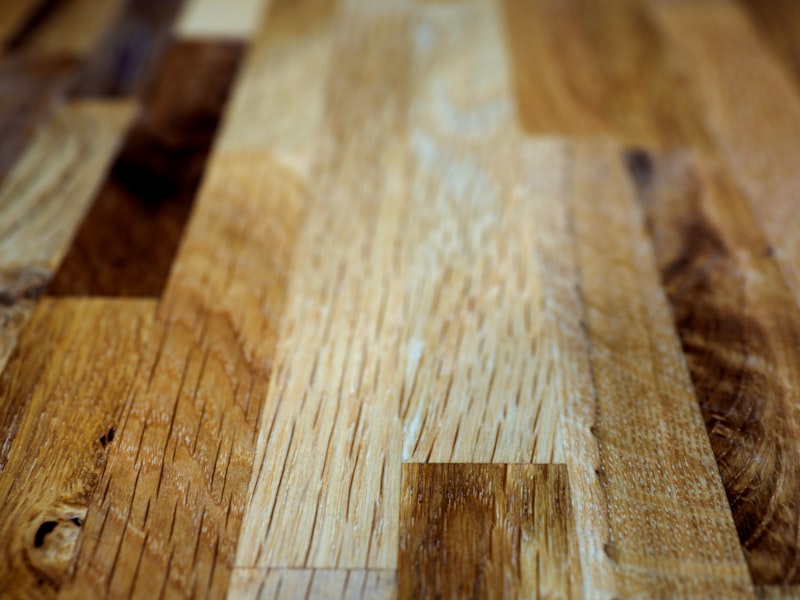
Both options are real wood on the surface. The difference is what's underneath, and that difference decides where each one can go in your house, how long it lasts, and what you'll pay to install it.
What's Actually Different Under the Surface
Solid hardwood is exactly what it sounds like: a single plank of wood, milled from top to bottom, nailed directly to a wood subfloor. Engineered hardwood has a thinner real-wood veneer, usually 2 to 6 millimeters, bonded on top of several layers of cross-laid plywood. That plywood core is what gives engineered wood a trick solid hardwood can't do: it can be glued or floated directly over concrete, which makes it the only real-wood option for basements and slab-on-grade homes.
| Factor | Solid Hardwood | Engineered Hardwood | Winner |
|---|---|---|---|
| Can install over concrete | No | Yes | Engineered |
| Refinishing lifespan | 4 to 6 sandings over 60+ years | 0 to 2 sandings, depends on veneer thickness | Solid |
| Dimensional stability | Expands and contracts noticeably with humidity | Far more stable across seasons | Engineered |
| Material cost | $5.00 to $12.00 / sq ft | $4.00 to $9.00 / sq ft | Engineered |
| Resale perception | Considered the premium standard | Accepted, but some buyers still prefer solid | Solid |
So Which One Actually Makes Sense for Your Project
If you're on a wood subfloor, above grade, and plan to own the home for decades, solid hardwood earns its higher price through refinish cycles alone. A single plank can be sanded down and refinished four or five times over its life, which means one installation can genuinely outlast you. Engineered wood makes more sense almost everywhere else: over concrete, in a basement, over radiant heating, or anywhere humidity swings are a real concern.
- Veneer thickness matters more than the brand name. A 3mm wear layer can be sanded once, maybe twice. A 6mm layer can take three refinishes, closing most of the gap with solid wood.
- Wide-plank engineered wood (7 inches or wider) is genuinely more stable than wide-plank solid hardwood, which is prone to cupping at those widths.
Wide-Plank Flooring Changes Which Option Makes Sense
Wide planks, 5 inches or wider, look increasingly popular in modern homes, but solid hardwood in wide widths is genuinely more prone to cupping and gapping as humidity swings through the seasons, since a wider board moves more in absolute terms for the same percentage of moisture change. Engineered wood's cross-laid plywood core resists this movement even at wide widths, which is why most wide-plank flooring on the market today, even from premium brands, is engineered rather than solid.
Underlayment and Installation Method Differ Meaningfully
Solid hardwood is nailed down, full stop, which requires a wood subfloor and rules out any floating installation. Engineered hardwood offers three installation methods, nail-down, glue-down, or floating, giving it flexibility solid wood simply doesn't have. That floating option in particular is what makes engineered wood viable over concrete and radiant heat systems where nailing isn't an option at all.
Frequently Asked Questions
Can engineered hardwood be refinished like solid wood?
Yes, but only if the top veneer is thick enough. A 2mm veneer usually can't survive a single sanding. A 4mm to 6mm veneer can typically handle two to three refinishes before you hit the plywood core.
Is engineered hardwood considered lower quality than solid?
No. High-end engineered hardwood uses the exact same premium wood species on top, just bonded to a more dimensionally stable core. The plywood base is an engineering advantage in humid or below-grade rooms, not a downgrade.
Does engineered hardwood sound hollow when floated?
A floated installation can sound slightly hollower underfoot than a glued or nailed installation, though a quality underlayment pad significantly reduces this. Glue-down or nail-down engineered installation, where subfloor type allows it, gives the most solid, quiet feel.
Is there a price difference between solid and engineered hardwood of the same species?
Often engineered runs slightly cheaper for the same visible wood species, since less of the expensive hardwood is used per plank, though premium engineered products with thick wear layers can cost close to or more than budget solid hardwood.
Can I mix solid and engineered hardwood in the same house?
Yes, and it's common: solid hardwood on the main above-grade level where it can be refinished repeatedly over decades, and engineered hardwood in a basement or over a concrete slab where solid wood simply isn't an option. Matching stain color between the two keeps a consistent look across levels.
How do I tell if flooring in a listing photo is solid or engineered without asking?
You usually can't tell from a photo alone, since a quality engineered floor with a thick wear layer looks identical to solid hardwood once installed and finished. Always ask directly, or check the manufacturer specification if you have access to it, before assuming either way.
Does either type of hardwood require special cleaning products?
Both need the same care: a pH-neutral wood floor cleaner and avoiding excess standing water, since both real wood surfaces can be damaged by harsh chemicals or a wet mop left sitting too long.
Related Remodeling Calculators
Interactive Concrete Slab & Pouring Cost Calculator
See the cost to pour a concrete slab or pad. Our concrete calculator covers patios, shed bases, and driveway pours across the US and Canada.
EstimatorDriveway Cost Calculator & Material Guide
Estimate asphalt driveway cost per square foot or concrete driveway cost. Try our driveway cost calculator for excavation, gravel base, and finishing.
EstimatorInteractive Fence Cost Calculator & Guide
Calculate the cost to build a fence including post hole digging. Our wood fence cost per foot calculator estimates cedar, vinyl, and metal.
In this Category
Planning to Finance This Project?
Model what a renovation loan would cost per month across different amounts, terms, and credit profiles, and read how HELOCs, home equity loans, and personal loans actually differ before you approach a lender.
Model Monthly Payments →US and Canada Pricing
Pricing rates represent consolidated metrics across US Midwest/South, US East/West Coasts, and major Canadian Metropolitan districts.