Tankless vs. Traditional Tank Water Heater
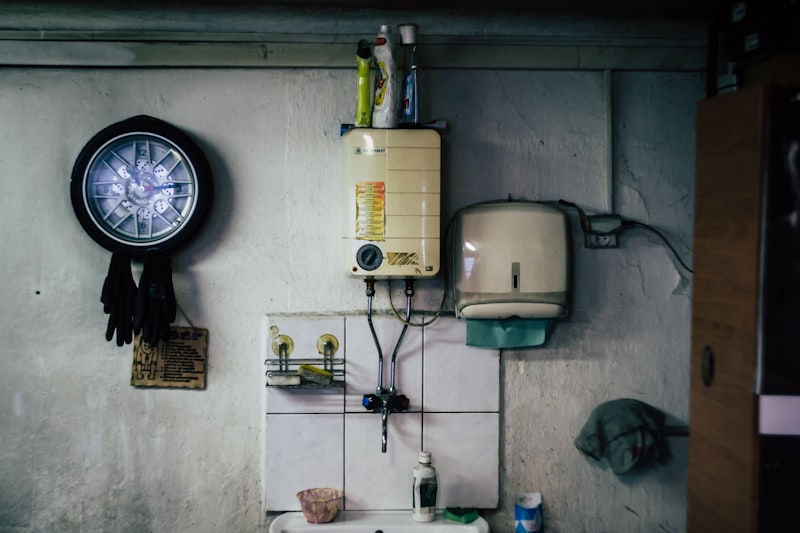
Tankless heats water on demand instead of storing 40 or 50 gallons at a constant temperature all day. That sounds like an obvious upgrade until you see the installation bill.
Upfront Cost vs. Long-Term Savings
A traditional tank heater is cheap and simple: it heats a set volume of water and keeps it hot, which wastes some energy through standby heat loss but requires minimal installation work. A tankless unit heats water only as it flows through, cutting standby losses to nearly zero, but it often needs a gas line upgrade, new venting, and sometimes an electrical upgrade, which is where the real cost premium comes from.
| Factor | Traditional Tank | Tankless | Winner |
|---|---|---|---|
| Unit + installation cost | $1,000 to $2,800 | $2,500 to $4,500 | Traditional |
| Lifespan | 8 to 12 years | 18 to 20+ years | Tankless |
| Standby energy loss | Yes, constant reheating | None, heats on demand | Tankless |
| Simultaneous hot water use | Limited by tank size | Limited by flow rate, not volume | Tie, depends on unit |
| Space required | Large floor footprint | Small, wall-mounted | Tankless |
Does Tankless Actually Save You Money
Eventually, yes, but the payback period is longer than most sales pitches suggest. Tankless units cut water heating energy use by roughly 24% to 34% for average households, which translates to real but modest annual savings. Given the higher install cost, most homeowners break even somewhere between 8 and 15 years, which is close to a traditional tank's entire lifespan. The stronger case for tankless is usually the doubled lifespan and space savings, not the energy bill alone.
- Undersized tankless units are the most common installation mistake. Running two showers and a dishwasher at once requires a unit rated well above minimum household flow rate, not the cheapest model on the shelf.
- Homes with hard water need a water softener or the tankless heat exchanger will scale up and lose efficiency within a few years.
Point-of-Use Tankless as a Middle Ground
A single whole-home tankless unit isn't the only option. Smaller point-of-use tankless units installed near a specific fixture, like a distant bathroom or an outdoor shower, can solve a hot-water-lag problem for that one location without the cost and infrastructure of a whole-home tankless conversion. This hybrid approach is worth considering for additions or renovated spaces far from the main water heater.
Maintenance Requirements Differ More Than People Expect
Traditional tanks need periodic anode rod inspection and occasional sediment flushing but are otherwise fairly low-maintenance. Tankless units need annual descaling, especially in hard-water areas, since mineral buildup on the heat exchanger reduces efficiency and can eventually cause error codes or reduced flow. Skipping tankless maintenance is one of the most common reasons homeowners report disappointing performance from an otherwise well-installed system.
Frequently Asked Questions
Do tankless water heaters ever run out of hot water?
Not in the way a tank does. A tankless unit won't run out of stored hot water, but if demand exceeds its maximum flow rate (like two showers and a washing machine running simultaneously), the output temperature will drop rather than run cold.
Is a gas line upgrade always required for tankless?
Not always, but often. Tankless units need a much higher instantaneous gas flow than a tank heater, so many homes need the gas line resized from the meter to the unit, which is a meaningful part of the installation cost.
How often does a tankless water heater need descaling?
Annually is standard in areas with hard water, and every 2 to 3 years in areas with naturally soft water. A whole-home water softener significantly extends the interval between descaling services either way.
Can a tankless water heater be installed as a straightforward swap for an existing tank?
Sometimes, but often not without additional work. Venting requirements, gas line sizing, and sometimes electrical needs for the ignition system differ enough from a tank that a true drop-in swap is the exception rather than the rule.
Do tankless water heaters require electricity to operate a gas unit?
Yes, most gas tankless units need electricity to power their electronic ignition and control board, which means a gas tankless heater still won't produce hot water during a power outage unless backed by a generator, similar to a modern gas tank unit with electronic ignition.
Is a bigger tankless unit always better?
Not necessarily. Oversizing adds unnecessary upfront cost and, for gas units, requires larger gas line capacity than may be needed. Sizing to your household's realistic peak simultaneous hot water demand, not the largest available unit, is the more cost-effective approach.
Do tankless water heaters take up less space than a tank?
Considerably less. A tankless unit mounts on a wall and takes up a fraction of the floor footprint of a traditional tank, which frees up meaningful storage or utility space in a small mechanical closet, basement, or garage.
Can a tankless water heater serve an entire house with multiple bathrooms?
Yes, provided it's sized correctly for the home's peak simultaneous demand. Larger homes sometimes install two smaller tankless units serving different zones instead of one oversized central unit, which can also add redundancy if one unit needs service.
Related Remodeling Calculators
Interactive Concrete Slab & Pouring Cost Calculator
See the cost to pour a concrete slab or pad. Our concrete calculator covers patios, shed bases, and driveway pours across the US and Canada.
EstimatorDriveway Cost Calculator & Material Guide
Estimate asphalt driveway cost per square foot or concrete driveway cost. Try our driveway cost calculator for excavation, gravel base, and finishing.
EstimatorInteractive Fence Cost Calculator & Guide
Calculate the cost to build a fence including post hole digging. Our wood fence cost per foot calculator estimates cedar, vinyl, and metal.
In this Category
Planning to Finance This Project?
Model what a renovation loan would cost per month across different amounts, terms, and credit profiles, and read how HELOCs, home equity loans, and personal loans actually differ before you approach a lender.
Model Monthly Payments →US and Canada Pricing
Pricing rates represent consolidated metrics across US Midwest/South, US East/West Coasts, and major Canadian Metropolitan districts.